Outstanding Success for Our EDANYA Research Group at EGU 2026: Juan Francisco Rodríguez Gálvez Awarded the EPOS GO! Prize
 1
/
1
1
/
1


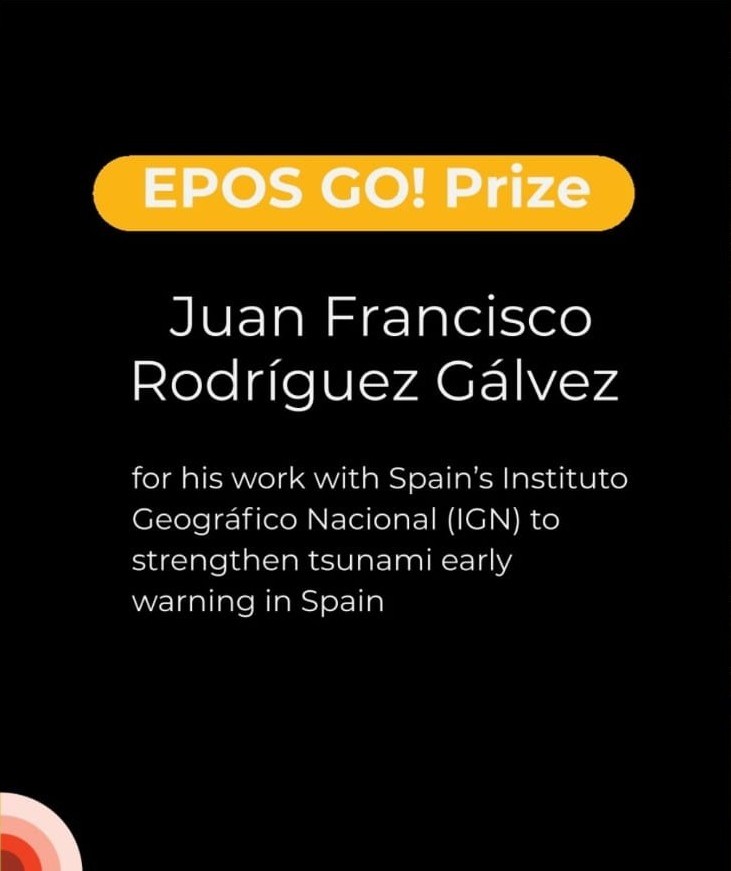
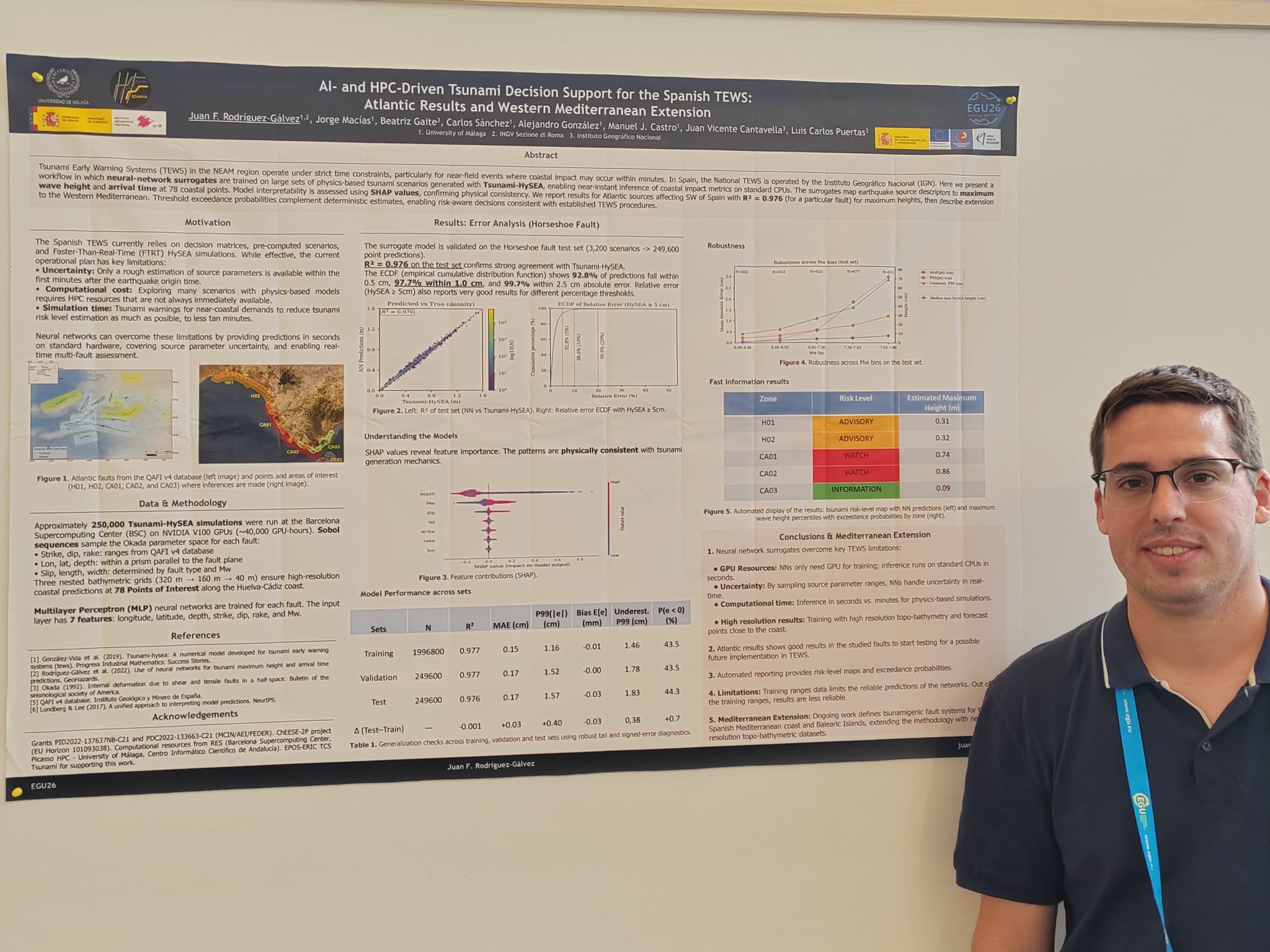
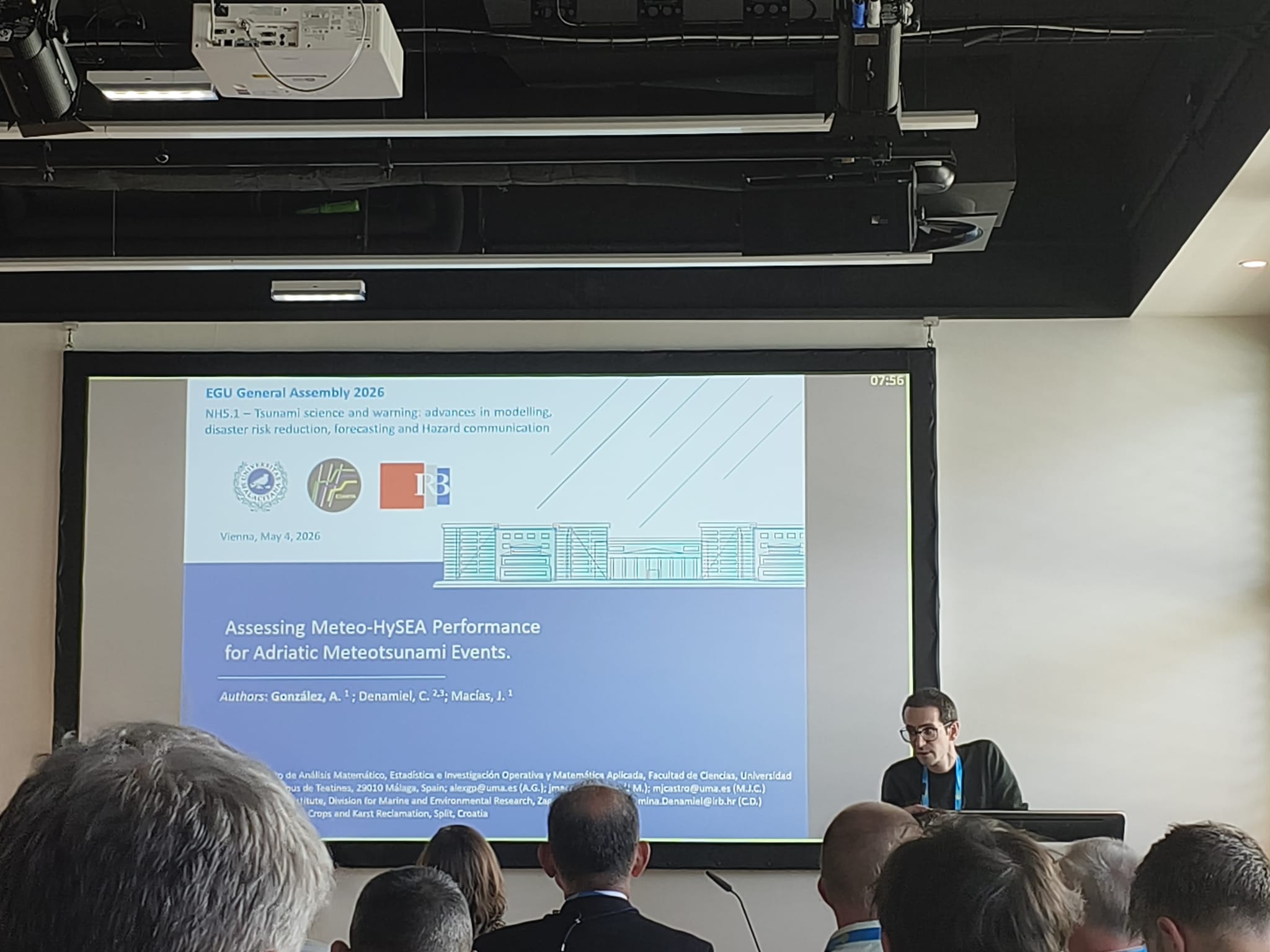
We are thrilled to share our group's outstanding success at EGU 2026 in Vienna! From Juan Francisco Rodríguez Gálvez winning the international EPOS GO! Prize for his revolutionary AI-driven tsunami early warning system, to breakthrough presentations by Alejandro González del Pino on meteotsunami and hazard modeling.
Discover how our team is leveraging supercomputing to build a safer, more resilient future.
Categoría: Ciencia
Our EDANYA research group at the University of Málaga has achieved remarkable recognition at the European Geosciences Union General Assembly (EGU 2026) held in Vienna. As a prominent partner in the European Center of Excellence for Supercomputing in Geosciences (ChEESE CoE), we showcased our cutting-edge research in tsunami early warning and marine hazard modeling, cementing our position at the forefront of international geoscience.
The absolute standout moment of the week was the presentation of the EPOS GO! Prize (Go! Challenge) to our researcher Juan Francisco Rodríguez Gálvez. This international award recognizes early-career scientists whose innovative research tackles complex Earth system challenges through cross-disciplinary approaches using advanced data.
Juan Francisco received the prize for his groundbreaking work, developed in collaboration with Spain’s Instituto Geográfico Nacional (IGN), aimed at drastically reducing response times for the Spanish Tsunami Early Warning System (TEWS). Because traditional numerical simulations can be too slow when every second counts during a crisis, the team trained advanced neural networks using a massive database of 250,000 precomputed simulations run on supercomputers.
By handling the heavy computation beforehand during the training phase, this AI-driven model can accurately estimate coastal impacts in just a few seconds once earthquake parameters are known. This provides almost instant guidance to emergency responders without needing active supercomputer access at the exact moment of the crisis. The model also integrates SHAP values as an interpretability layer to ensure we can understand and validate the AI's reasoning. Currently calibrated for the Atlantic sector (Huelva and Cádiz), we will soon extend this work to the Mediterranean. This research was presented at EGU 2026 in the poster “AI- and HPC–Driven Tsunami Decision Support for the Spanish TEWS: Atlantic Results and Western Mediterranean Extension”, co-authored alongside our members and IGN colleagues.
Our impact at the assembly extended even further. Alejandro González del Pino delivered an insightful presentation on the performance of our Meteo-HySEA code applied to meteotsunami events in the Adriatic Sea, proving the exceptional robustness and real-world applicability of our simulation tools under complex meteorological conditions.
Additionally, one of our lead researcher, Jorge Macías Sánchez, contributed to multiple oral presentations covering tsunami source processes, high-resolution propagation, and probabilistic hazard assessments, demonstrating our leadership within the scientific community.
These milestones underscore our group's leading position in leveraging High-Performance Computing (HPC) and Artificial Intelligence (AI) to protect coastal communities and build a more resilient future against natural hazards.


